
Once there Was a Way to Get Back Home: The Grief of Leaving my Hometown Community Due to Estrangement. By Charlotte.
Hi, I am Charlotte Danielle and I am a 2nd-year PhD student at the University of St Andrews. I am really deeply interested in economics, politics, killer whales and the Beatles.
The worst day of my life wasn’t the day I left my family home; it was the day I found out my favourite teacher was leaving my school. It was a mild spring day, and I was in my last lesson, history, when the teacher nonchalantly announced this particular teacher leaving. I thought that your heart didn’t physically miss a beat until that day, but I felt it stop as soon as those words were spoken. After the lesson, I ran to my best friend and broke down — they only had ten more weeks in my school, which felt more like home than my actual house. On his last day, I went to his office and gave him a card, and he told me I was a good person and gave me the only hug that ever felt genuine in my life. Eight months later, I left my literal home for good. A few months after that, I went to London for my undergraduate degree and never returned to my hometown.
Estrangement is usually framed as a break in the relationship between immediate family members. My estrangement from my mother, grandmother and brother is what people tend to assume upsets me, but they are not the source of my grief. I grew up in a town outside Liverpool, a perfect mix of Scouse edge and sprawling countryside. I would spend my summers walking the vast fields on the outskirts of the town with my best friend, talking about anything and everything. The only place that feels like Christmas is Liverpool City Centre: the Liverbirds watching over the city lights, and the smell of a fresh Build-A-Bear was the hallmark of the season. School was always home and community to me, right from the start, and I frequently see the faces of my favourite teachers and old friends in my dreams.
It is hard to communicate this estrangement to well-intentioned individuals. They will tell me everyone had favourite teachers at school, or that we all miss our friends from home at university. But I can’t go home. And even if I could, I cannot access the people that I miss. My wider community was my surrogate family, and the school, the fields, and the streets of Liverpool were my surrogate home, but they are no longer mine. The places have changed, the people have changed, and I have changed. There is a distinct grief in realising you are no longer who you were back then, and that you are no longer the person that your people once knew.
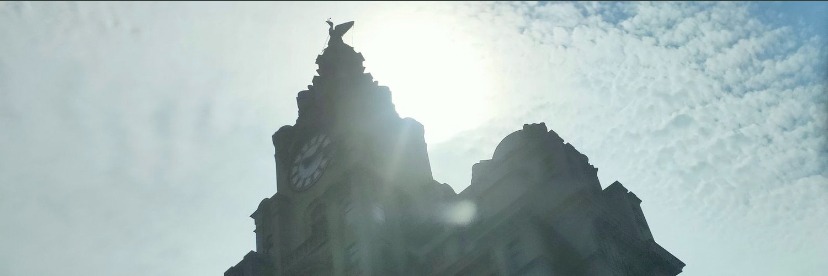
My family’s actions made my hometown inaccessible, forcing me to build a life elsewhere to ensure my own safety. Liverpool is an incredible city, dare I say the best city in the world, but it is no longer mine. I have tried walking in the countryside, YET the air does not taste the same. I love my new friends and mentors, but the laughter doesn’t have the same cadence. My new city’s Christmas lights sparkle differently. I wish I had a solution to the grief, but I am still working out how to cope six years later. I do not carry resentment but I do carry what was taken.
Laughter in a different cadence is not necessarily a bad thing, though; it just takes a bit of getting used to. Losing everything you have ever known to that point doesn’t mean you lose your worth, and you will love and laugh and connect again; it might just feel different. Two truths can exist at once: I mourn the loss of my community and my city everyday in my life, but I do not mourn the family I left behind. I am excited about what I get to build and the new people I get to meet because I chose to remove myself from danger and I will build a safe life for myself and my future family. It is also a great privilege to live with holes that can never be filled. That is powerful, and it requires me to carry that weight a long time.
The End

Get Involved & Get Supported
Want to write your own blog? Submit a pitch here at https://bit.ly/AoUBlogPitch.
There are several advocacy and support lines out there for care experienced and estranged students.
- In Wales CE support is from Voices from Care Cymru advocacy line online or at 02920 451431.
- In Scotland CE support is from Who Cares? Scotland online or at 0330 107 7540.
- In Northern Ireland CE support is from VOYPIC online or at 028 9024 4888.
- In England CE support is from the Care Advice Line (Become) at 0800 023 2033, via WhatsApp at 0786 003 4982, or by email at advice@becomecharity.org.uk. There is also Help at Hand (Children’s Commissioner) at 0800 528 0731 or emailing help.team@childrenscommissioner.gov.uk.
- Together Estranged (TE) is a nonprofit that supports and empowers estranged adult children.
- UniAdvocates are trained Independent Advocates who listen to a student’s concerns, explain options available to them, and facilitate action. Request a UniAdvocate online or contact them at student@adventadvocacy.co.uk or call their office on 01325 776 554.
- The Mix general and specific for young people aged 16-25, and they also have peer support from other young people in The Mix Community.
- Citizens Advice support, which is available across all four nations of the UK, and can be online, in-person or over the phone.